2026–2027 Family Planner KDP
If you're creating a family planner for Kindle Direct Publishing—or preparing one for Canva customization and digital resale—you need more than just pretty layouts. You need reliability, technical precision, and real-world compatibility. The 2026–2027 Family Planner KDP isn’t just another printable PDF—it’s a professionally engineered interior file built to pass Amazon’s strict upload requirements without revision delays, bleed errors, or formatting surprises.
Many creators assume that any well-designed PDF will work on KDP. That’s where things go sideways—fast. A single margin misalignment, missing bleed, or untested image resolution can trigger an automatic rejection, cost hours of troubleshooting, or worse, lead to a published book with cropped corners or blurry text. These aren’t edge cases—they’re among the top reasons new planners get flagged during KDP review.
What’s Often Overlooked (and Why It Matters)
First: bleed isn’t optional. If your 2026–2027 Family Planner KDP interior lacks proper 0.125-inch bleed on all sides, Amazon may trim into your content—especially along weekly spreads, headers, or decorative borders. Some designers skip bleed because their preview looks fine on screen. But print isn’t screen. Without bleed, what looks centered in your PDF viewer may become off-center—or even cut off—on the physical copy.
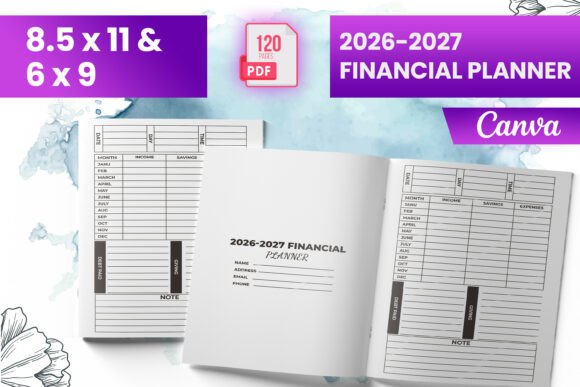
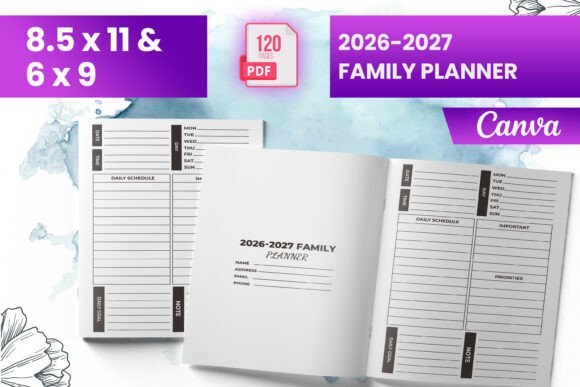
Second: page count and sizing must match KDP’s supported specs. This 2026–2027 Family Planner KDP includes 120 total pages across six standard sizes (6″ × 9″, 8.5″ × 11″, and others), each pre-formatted with correct margins, gutter allowances, and CMYK-ready color profiles. That means no last-minute resizing before upload—and no guessing whether your 8.5″ × 11″ version will render correctly as a paperback versus a large-print edition.
Third: file types matter beyond the PDF. While the ready-to-upload PDF is the core asset, having supporting PNG and JPG files gives you flexibility. Need to tweak a cover mockup? Swap out a monthly calendar graphic? Adjust a habit tracker icon? Those high-res raster assets let you iterate quickly in Canva or Photoshop—without re-exporting from scratch or risking compression artifacts.
Common Missteps—and Smarter Alternatives
Mistake: Downloading a “KDP-ready” planner without verifying actual bleed, resolution, or font embedding.
Better approach: Check the file properties before uploading. Open the PDF in Adobe Acrobat (or free alternatives like PDF-XChange Editor) and inspect the page boxes—crop box should extend 0.125″ beyond the trim box. Also confirm fonts are embedded (not subset) and images are at least 300 DPI at final size.
Mistake: Assuming one PDF works across all trim sizes.
Better approach: Use the right file for the right format. This 2026–2027 Family Planner KDP includes separate, tested PDFs for each size—not scaled versions. That avoids stretched grids, distorted checkboxes, or inconsistent spacing between daily lines. It also saves time when listing multiple editions on your KDP dashboard.
Mistake: Skipping the intro page or treating it as filler.
Better approach: Treat the intro page as functional onboarding. This version includes a clean, purpose-built intro that explains how to use the planner—customization tips, symbol keys, and space for family names. Readers who understand the system upfront engage more deeply, reducing negative reviews about “confusing layout.”
Why Testing on KDP Changes Everything
“Tested on Amazon KDP” isn’t marketing fluff—it’s a signal that someone already navigated the platform’s quirks. For example: KDP sometimes renders light gray text (#CCCCCC) as nearly invisible on cream paper. Or it may compress JPEGs aggressively unless saved with specific subsampling settings. This 2026–2027 Family Planner KDP was uploaded, previewed, ordered as a proof, and adjusted based on real output—not assumptions. That means consistent line weights, legible small type, and accurate color reproduction—even on budget paper stocks.
It also means no hidden gotchas around page numbering, hyperlinked table-of-contents (if used), or section breaks. If you’re bundling this with a companion workbook or journal, those structural elements won’t break during KDP’s auto-processing.
What You’re Actually Getting—No Guesswork
- A ready-to-upload PDF file—no design software required, no export tweaks needed.
- Six trim sizes (6″ × 9″, 7″ × 10″, 8″ × 10″, 8.5″ × 11″, and two more)—each independently optimized for readability and printing fidelity.
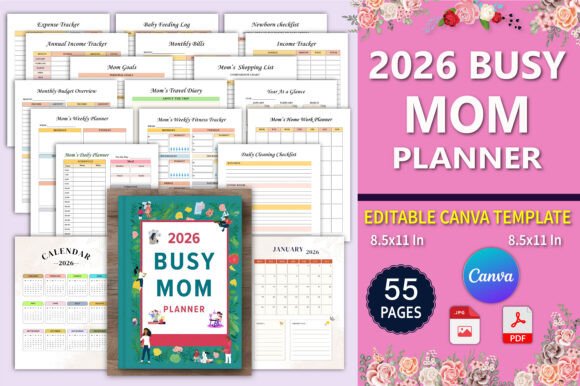
- 120 total pages, thoughtfully distributed: yearly overviews, monthly calendars with notes sections, weekly spreads with goal tracking, habit dashboards, meal planners, and blank reflection pages—all balanced for usability, not just aesthetics.
- An intro page that sets expectations and invites participation—not just decoration.
- PNG and JPG source files for easy Canva edits, social media previews, or custom branding—no pixelation, no layer flattening.
And yes—every file includes full bleed, uses industry-standard CMYK color mode, and embeds all fonts. No “almost ready.” No “just needs minor tweaks.” Just upload, publish, and move forward.
Before You Download—A Quick Checklist
Ask yourself:
- Do I need flexibility to edit in Canva—or am I publishing directly via KDP?
- Which trim size best matches my audience’s preferences? (e.g., 6″ × 9″ fits easily in bags; 8.5″ × 11″ offers more writing space.)
- Will I be adding my own branding, logo, or cover? If so, do I have access to editable assets (PNG/JPG) at high resolution?
- Have I reviewed Amazon’s current KDP interior guidelines? (They update occasionally—especially around bleed and file naming.)
If you answered “yes” to needing speed, accuracy, and confidence—this 2026–2027 Family Planner KDP delivers. It’s designed for people who value their time, respect their readers’ experience, and want to avoid the frustration of rejected uploads or poorly printed interiors. No guesswork. No reformatting marathons. Just a solid foundation—ready when you are.