Inspirational Journal for Women
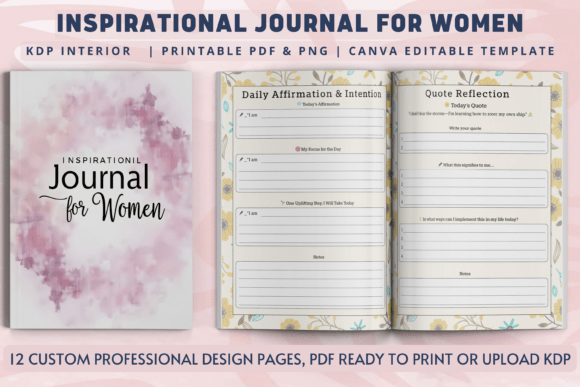
Thoughtful reflection isn’t a luxury—it’s a strategic lever. For women navigating complex professional roles, creative projects, or personal transitions, the Inspirational Journal for Women serves as a grounded, editable framework—not just for inspiration, but for consistent decision-making, clarity refinement, and intentional growth. Unlike generic journals, this Canva-editable template is built around evidence-informed prompts that align with how adults actually process experience: through structured reflection, values anchoring, and iterative sense-making.
Why Structure Matters More Than Motivation
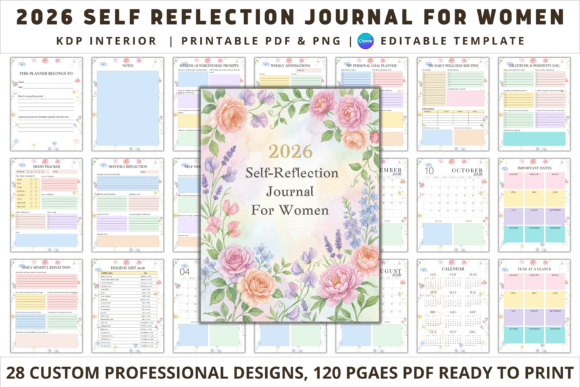
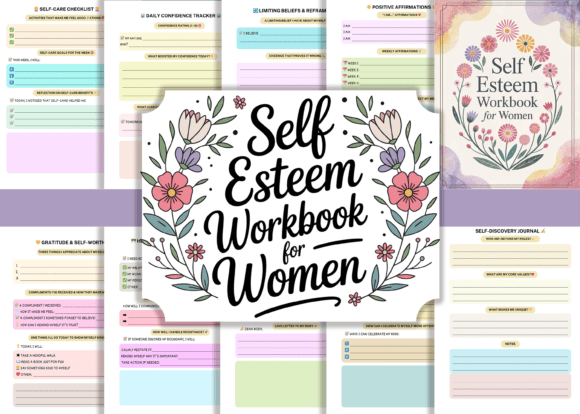
Motivation fades. Systems endure. The Inspirational Journal for Women replaces vague “feel-good” journaling with 12 purpose-built page types—each calibrated to support a specific cognitive or emotional function. Consider the Values Strengths Discovery page: it doesn’t ask “What are your values?” It guides users to identify patterns across past decisions, highlighting where action and belief have aligned—or diverged. That distinction transforms abstract ideals into operational insights. Similarly, the Overcoming Doubt spread invites naming the specific thought (“I’m not qualified”), tracing its origin (“My manager dismissed my idea in Q3”), then testing it against recent evidence (“I led the client workshop that closed $28K”). This isn’t affirmation—it’s cognitive calibration.
Strategic Use Cases Across Roles
The real utility of the Inspirational Journal for Women emerges when matched to concrete goals—not mood. Here’s how different professionals apply it with intention:
- Coaches and wellness practitioners use the Daily Affirmation Intention and Self-Care Check-In pages as pre-session diagnostics—spotting recurring tension points before they escalate into burnout or disengagement.
- Digital product sellers treat the editable Canva file as a modular asset: swapping fonts, color palettes, or even reordering pages to match brand voice before exporting for KDP or Etsy. The included Free Book Cover and bleed-ready 8.5×11 sizing reduce production friction by 3–4 hours per launch.
- Educators and facilitators extract individual pages—like Kindness Log or Gratitude Growth—as low-stakes classroom tools that build emotional literacy without requiring curriculum overhauls.
- Freelancers and solopreneurs anchor weekly planning to the Monthly Inspiration Recap, using it not to review outputs, but to assess alignment: “Did the projects I accepted reflect my stated values around autonomy and impact—or did I default to urgency?”
When Editing Becomes a Risk, Not a Feature
Because the Inspirational Journal for Women is fully editable in Canva, it invites customization—but editing without strategy dilutes its effectiveness. One common misstep: replacing all prompts with open-ended questions (“What do you want?”) instead of preserving the scaffolding that surfaces insight. Another: over-branding the interior—adding logos or dense typography to every page—which visually competes with reflection and raises cognitive load. The 115-page PDF includes PNG files precisely so users can modify cover design or add watermarks *without* disrupting the internal rhythm of guided prompts.
Before editing, ask: What outcome am I optimizing for? If it’s brand consistency, edit the cover and headers—but leave the reflection prompts intact. If it’s audience specificity (e.g., nurses, educators, new mothers), adapt only the examples within existing frameworks—not the structure itself. The Vision Dream Mapping page works for launching a podcast or planning elder care; changing the prompt from “Where do I want to be in 18 months?” to “What does stability feel like next quarter?” preserves utility while increasing relevance.
Integrating the Journal Into Real Workflows
Consistency beats volume. A 7-minute daily engagement with the Inspirational Journal for Women yields more long-term value than an hour-long monthly session—if it’s anchored to behavior. Try these practical integrations:
- Pair reflection with action: After completing the Quote Reflection page, write one sentence on what you’ll *do differently* this week—not just how you’ll feel.
- Use the This Book Belongs To page as a living contract: Revisit it quarterly. Does the name still reflect who you’re becoming? Has your definition of “belonging” shifted?
- Leverage the Notes Section for cross-reference: Jot down meeting takeaways, client feedback, or project blockers—and later link them to patterns spotted in Overcoming Doubt or Values Strengths Discovery.
For digital sellers, the Notes Section also doubles as a lightweight product development log: track which pages get the most customer questions, which edits increase conversion, or where users request additional guidance (e.g., adding a budget tracker to the Self-Care Check-In). That data informs version updates—not assumptions.
Avoiding the “Inspiration Trap”
The biggest risk in using any inspirational tool—including the Inspirational Journal for Women—is mistaking documentation for progress. Writing “I am confident” in the Daily Affirmation Intention page has zero strategic value unless paired with behavioral evidence: “I declined the scope-creep request from Client X,” or “I shared my pricing framework in the team Slack channel.” The journal supports growth only when used as a mirror—not a mask.
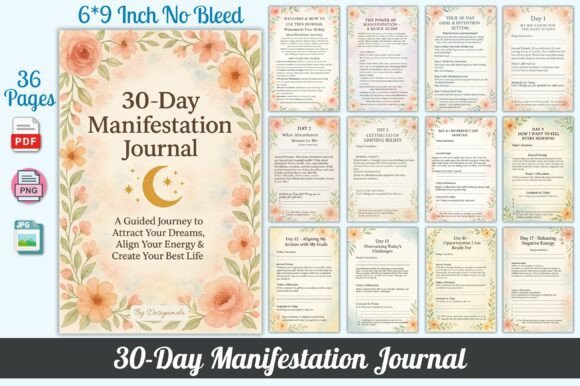
That’s why the Gratitude Growth page avoids cliché (“I’m grateful for my family”) and instead asks: What specific action created safety, connection, or relief this week—and who contributed to it? That phrasing surfaces agency, interdependence, and observable cause-and-effect—information that feeds better decisions next time.
Long-Term Positioning, Not Short-Term Spark
Brands, creators, and educators who embed the Inspirational Journal for Women into their offerings signal something deeper than aesthetics: they prioritize sustainable self-awareness over performative positivity. When sold alongside a course on boundary-setting, the Values Strengths Discovery page becomes proof-of-concept—not fluff. When offered as a lead magnet for a newsletter on leadership presence, the Vision Dream Mapping spread demonstrates methodology before monetization.
For those building long-term authority, the journal’s editable nature allows iterative refinement: test a revised Kindness Log with a small cohort, measure completion rates and qualitative feedback, then scale only what proves usable—not what looks polished. That approach builds trust faster than static templates ever could.
Getting Started Without Overcommitting
You don’t need to fill every page. Start with two: the Daily Affirmation Intention (used for 5 minutes each morning) and the Monthly Inspiration Recap (reviewed on the last Sunday of the month). Track only one metric across 30 days: How often did my stated intention align with my actual choices? That single data point reveals more about decision consistency than 100 pages of unstructured writing.
If you’re evaluating the Inspirational Journal for Women for resale, run a controlled test: list it alongside your existing products, but use the Canva file to add a subtle, value-aligned header to the cover (“Designed for Clarity, Not Just Calm”). Monitor click-through and conversion lift—not just sales. That tells you whether the positioning resonates, not just the product.
Ultimately, the Inspirational Journal for Women earns its place not because it’s beautiful—though the elegant design lowers the barrier to entry—but because it converts reflection into leverage. It turns quiet moments into diagnostic data, intention into evidence, and personal growth into repeatable practice. That’s not inspiration. It’s infrastructure.