300 Self Identity Journal Prompts
Self-knowledge isn’t discovered in a single moment—it’s built, layer by layer, through consistent, intentional reflection. The 300 Self Identity Journal Prompts offers more than a list of questions; it delivers a structured, psychologically grounded framework for exploring who you are, how you’ve evolved, and what truly matters to you—not as an abstract ideal, but as lived experience.
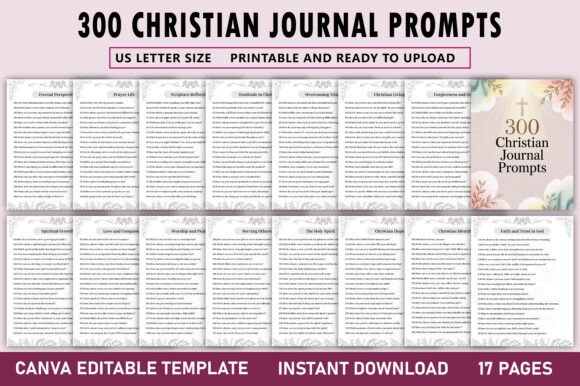
This resource organizes 300 prompts into 25 thematic categories—like “Core Values,” “Childhood Influences,” “Belonging & Community,” “Body Image & Embodiment,” and “Future Self Vision”—each with 12 deliberately sequenced prompts. That structure matters: it guides users from surface-level awareness (“What makes me feel energized?”) into deeper territory (“When have I compromised my values to fit in—and what did that cost me?”). Unlike random prompt collections, this progression mirrors how identity work actually unfolds—incrementally, contextually, and with increasing emotional safety.
For professionals navigating career transitions, the “Work & Purpose” and “Strengths & Limitations” sections help clarify alignment between daily tasks and internal drivers. A marketing manager reconsidering freelance work might use prompts like *“What parts of my current role feel like ‘me’—and what parts feel like performance?”* or *“When have I succeeded by leaning into a quiet strength, not a loud one?”* These aren’t theoretical—they’re decision-support tools that surface patterns invisible in day-to-day busyness.
Creatives and educators benefit from the “Creativity & Expression” and “Learning & Growth Mindset” clusters. A freelance illustrator building a personal brand might explore prompts such as *“What did I love making before I learned to judge it?”* or *“When has feedback changed my relationship with my own voice—not just my technique?”* These questions bypass perfectionism and reconnect users to intrinsic motivation, which is especially valuable when burnout or creative block sets in.
The Canva-editable format transforms utility. You’re not just receiving static pages—you get full control over typography, spacing, color, and layout. Coaches can insert their logo and signature tone before printing client workbooks. Bloggers can adapt prompts into branded newsletter series. Educators can simplify language for teen workshops or add discussion cues for classroom use. Even small business owners launching wellness products can repurpose sections into lead magnets—no design skills required, just clear intent.
Each prompt is written with precision—not vague (“What do you want?”) but anchored in observable behavior or memory (“What’s one small choice you made this week that quietly honored your boundaries?”). This specificity reduces overwhelm and increases completion rates. Users report spending 8–12 minutes per entry—not hours—and still gaining insight because the language invites honesty, not performance.
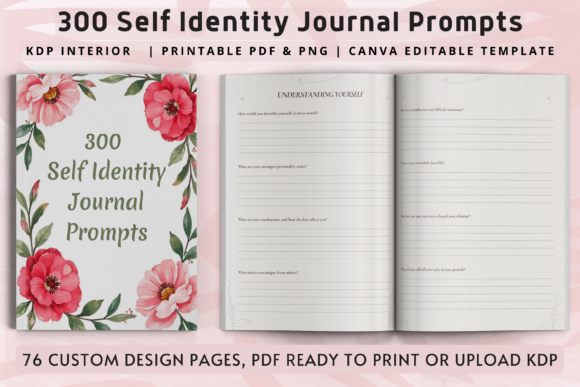
The included 76-page PDF (8.5×11", print-ready with bleed) and PNG cover file mean zero formatting delays. If you're publishing on Amazon KDP, the template has been tested for margins, font embedding, and bleed compliance—no last-minute reformatting before submission. That’s time reclaimed: roughly 6–10 hours typically spent troubleshooting low-content book setup, now eliminated.
Who benefits most? First, entrepreneurs building journal-based digital products—especially those already using Canva for branding consistency. Second, therapists, life coaches, and HR facilitators seeking ethically grounded, non-clinical tools for self-exploration (note: this is not a substitute for clinical support, but complements it well). Third, content creators producing newsletters, courses, or social media series around authenticity, resilience, or personal development—the prompts serve as evergreen, reusable material.
It’s also practical for individuals managing complex identities—those navigating cultural duality, neurodivergence, chronic illness, or major life shifts. Prompts in “Identity & Labels,” “Safety & Vulnerability,” and “Healing & Integration” avoid prescriptive language. Instead, they invite witnessing: *“What parts of myself have I learned to mute—and in what settings does that happen most often?”* That kind of gentle inquiry builds self-trust without demanding resolution.
That said, this isn’t for everyone—and that’s by design. If you prefer unstructured, stream-of-consciousness journaling, the thematic scaffolding may feel limiting at first. Likewise, if your goal is rapid habit tracking or mood logging, this leans deeper and slower. It’s built for depth, not speed. Some users pair it with bullet journaling or voice notes—using the prompts as anchors, then expanding freely elsewhere.
Also worth noting: while the Canva file is fully editable, it requires a free Canva account and basic familiarity with text and layout tools (drag-and-drop, font selection, page duplication). No coding or advanced design knowledge is needed—but users expecting a “click-to-publish” button will need to invest 20–40 minutes customizing before export. That’s intentional: thoughtful customization strengthens ownership and relevance.
Real-world usage shows consistent themes emerge—not just in answers, but in how people engage. Teachers report students returning to the same prompt across weeks, each time uncovering new layers. Entrepreneurs find clarity on pricing or positioning after working through “Worth & Recognition” prompts. Parents notice shifts in how they speak to their children after reflecting on “Messages I Internalized About Success.” These aren’t isolated insights. They compound.
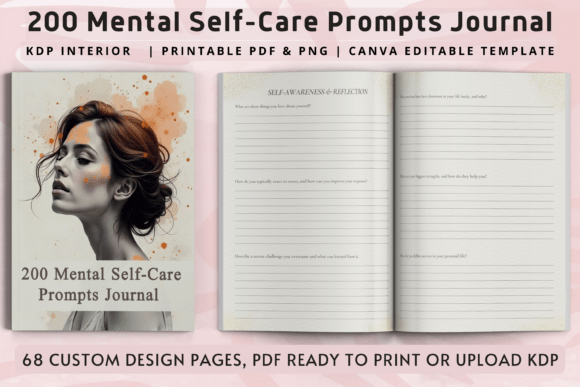
The “This Book Belongs To” page and clean interior design reduce cognitive load—no distracting graphics or dense text blocks. White space, consistent heading hierarchy, and generous line height support focus, especially for readers managing attention fatigue or dyslexia. Accessibility wasn’t an afterthought; it’s embedded in the typography choices and layout rhythm.
Finally, the prompts avoid trendy jargon (“manifest,” “vibe check,” “level up”) in favor of precise, human-centered language. That makes them durable—not tied to algorithmic trends, but aligned with enduring psychological principles: narrative identity theory, self-determination theory, and reflective practice models used in adult education and coaching certification programs.
If you’ve tried journaling before and stopped—because prompts felt shallow, repetitive, or disconnected from your real life—this resource meets you where you are. It doesn’t assume you know where to begin. It assumes you’re already paying attention—and gives you better questions to ask yourself.