Why the Craft Business Planner Is the Secret Weapon Every Handmade Entrepreneur Needs
Running a handmade business is equal parts passion and precision. You pour your creativity into every stitch, brushstroke, or kiln-fired piece — but behind the beauty lies real-world complexity: managing inventory across three craft fairs, tracking Etsy fees and PayPal deposits, remembering which customer ordered lavender-scented soy candles *and* when they’re scheduled to ship, and still finding time to brainstorm next season’s collection. Without structure, even the most talented crafters risk burnout, missed opportunities, or silent profit leaks.
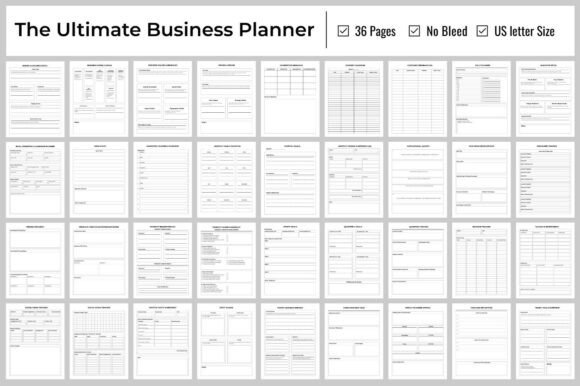
Enter the Craft Business Planner — not just another notebook, but a purpose-built operational system designed specifically for makers who sell. Whether you're launching your first Etsy shop, scaling from weekend markets to wholesale accounts, or juggling multiple creative income streams, this planner bridges the gap between artistic vision and business viability.
More Than a Calendar: A Holistic Business Operating System
Unlike generic planners or fragmented digital apps, the Craft Business Planner integrates all essential small-business functions into one cohesive, tactile experience. Its design reflects deep understanding of how craft entrepreneurs actually work — not how corporate project managers do. It meets you where you are: at your studio desk, in your car en route to a pop-up, or cross-legged on the floor sorting beads before a big fair.
This isn’t about rigid scheduling — it’s about intentional flow. The planner supports your rhythm: spontaneous inspiration paired with disciplined follow-through, creative bursts balanced with administrative clarity.
🗓️ Daily, Weekly & Monthly Planners: Your Time-Management Anchor
Time is your most non-renewable resource — especially when your “office” doubles as your kitchen table and your “team” is just you (plus maybe a very supportive cat). The planner’s layered time sections prevent overwhelm by breaking big goals into actionable layers:
- Daily pages include space for top 3 priorities, quick wins, and mindset notes — helping you start each day grounded, not reactive.
- Weekly spreads align tasks with energy levels (e.g., “Batch packaging Mondays,” “Social media prep Wednesdays”) so creativity and admin don’t compete.
- Monthly overviews highlight deadlines, craft show dates, tax milestones, and seasonal product launches — turning abstract timelines into visual reality.
Example: A ceramicist uses her weekly spread to block “Glaze mixing + test firing” on Tuesdays, “Etsy listing photography” on Thursdays, and “Wholesale inquiry follow-ups” every Friday afternoon — no more forgotten emails or rushed photos.
💰 Income & Expense Trackers: Clarity Where Chaos Lives
Many crafters underprice their work not out of lack of confidence — but because they’ve never truly calculated their true cost per item. The planner’s financial trackers go beyond simple income/expense columns. They guide you to log:
- Each sale source (Etsy, local shop consignment, craft fair cash, Instagram DM order)
- Fees broken down (platform fees, payment processing, shipping labels, booth rental)
- Supply costs tied directly to specific products (e.g., “$4.20 clay + $1.80 glaze + $0.95 packaging = $6.95 COGS for Mug #A7”)
- Monthly profit targets vs. actuals — with space to reflect on variances (“Why did April sales dip? Was it rainy weather? Or did I skip Instagram Stories that week?”)
This isn’t accounting for accountants — it’s financial literacy built for makers.
📦 Inventory & Product Planning: Stop Guessing, Start Knowing
Ever packed for a craft fair only to realize you brought 12 wire-wrapped necklaces… but zero earrings? Or launched a “limited edition” batch only to discover you’d already promised half of it to a boutique?
The inventory section solves this with intuitive, low-friction logging:
- SKU creation templates (no more “BlueVase001” confusion)
- Real-time stock counts with reorder thresholds (“Alert me when beeswax candles hit ≤5 units”)
- Product idea incubator pages — sketch, name, price, target audience, materials needed — all before cutting a single sheet of leather
- Supply usage logs linked to products (“Each macramé wall hanging uses 12m cotton cord + 1 wooden dowel”)
One fiber artist reduced her restocking time by 70% after switching from sticky notes to the planner’s inventory grid — and caught a $200+ supply over-order before it shipped.
🛒 Order Forms & Customer Receipts: Professionalism, Simplified
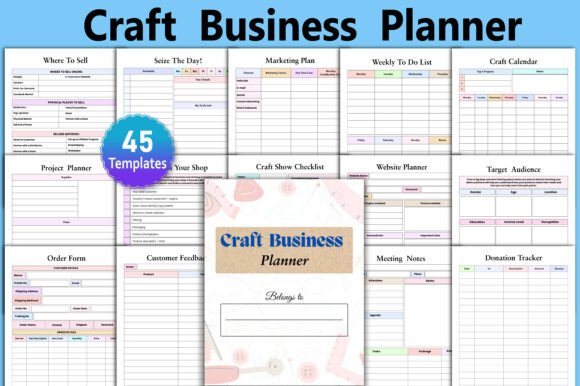
Handmade buyers don’t just buy products — they buy trust, story, and care. Disorganized order handling erodes that instantly. The planner includes tear-out-style order forms with fields for:
- Customer name, contact, and preferred communication method
- Itemized order + customization notes (“Add ‘Happy Birthday’ engraving”)
- Shipping carrier, tracking number, and postage cost
- Receipt copy with business name, date, and thank-you note space
No more scrambling to find a receipt in your email inbox or misplacing a sticky-note order while packing at midnight.
📢 Marketing Strategy Pages: From Scrolling to Selling
“I’ll post on Instagram soon” isn’t a strategy — it’s a hope. The planner transforms marketing from vague intention into executable action:
- Quarterly campaign calendars (e.g., “Q3: Back-to-School Teacher Gifts + Fall Harvest Collection Launch”)
- Social media content buckets (Behind-the-Scenes, Customer Spotlights, New Product Teases)
- Email list growth trackers (“Added 23 subscribers via craft fair sign-up sheet”)
- Paid ad experiment logs (“$50 Facebook ad → 12 clicks → 3 sales → $89 ROI”)
It encourages consistency without rigidity — because your best marketing often happens organically, like that viral TikTok showing your pottery wheel fail-turned-success.
🎯 Creative Goals & Action Steps: Turning Vision Into Milestones
“Grow my business” is too vague. “Launch 3 new jewelry lines by December, each with 5 SKUs, supported by a mini email series and 2 Instagram Reels” is trackable.
The goal-setting section uses proven behavioral frameworks — think SMART goals adapted for creatives. Each goal includes:
- Clear “why” statement (e.g., “To serve eco-conscious brides with sustainable wedding favors”)
- Quarterly milestones (“Q1: Finalize 2 designs + source compostable packaging”)
- Weekly action steps (“Research 5 biodegradable wrap options”)
- Reflection prompts (“What slowed me down? What energized me?”)
📈 Craft Show Event Planners: Confidence, Not Chaos
For many makers, craft fairs are revenue lifelines — and logistical nightmares. The dedicated event section replaces frantic last-minute lists with calm preparedness:
- Booth setup checklist (tent, tablecloth, signage, lighting, change box)
- Inventory pre-pack list (with quantities per SKU)
- Vendor contact log (insurance requirements, load-in times, WiFi password)
- Post-event review template (“Top 3 takeaways,” “Best-selling item,” “1 thing to improve next time”)
One woodworker reported doubling her fair-day sales after using the planner’s “customer conversation prompts” — simple questions like “What made you stop at our booth today?” that sparked genuine connection and repeat orders.
Who Really Benefits? (Hint: It’s Not Just Beginners)
Yes, new crafters gain massive clarity. But seasoned sellers use it differently — auditing past year’s data to spot trends, stress-testing pricing models, or delegating tasks using its standardized templates. Teachers, makerspaces, and craft guilds even adopt it for workshops — proving its versatility.
And here’s a common misconception: “Digital tools are faster.” True — for some tasks. But research shows tactile planning improves memory retention, reduces cognitive load, and fosters deeper reflection. The Craft Business Planner doesn’t replace your laptop — it complements it, capturing ideas before they vanish and grounding strategy in physical presence.
In a world of infinite digital noise, sometimes the most powerful business tool fits perfectly in your tote bag, waits patiently on your shelf, and asks only that you show up — pen in hand, vision in heart.